All exporters of goods & services having an import-export code (IEC) number shall be eligible for recognition as a status holder on achieving specific turnover. Status recognition depends upon export performance
An applicant shall be categorized as status holder upon achieving export performance during current and previous three financial years. The export performance will be counted on the basis of FOB value of export earnings in free foreign exchange. For deemed export, FOR value of exports in Indian Rupees shall be converted in US$ at the exchange rate notified by CBEC, as applicable on 1st April of each Financial Year.
Categories of Status Certificates: Each type of Status Certificate eligibility levels of export performance criteria.
Status Category
Export Performance Threshold in US $ million
One Star Export House
3
Two Star Export House
15
Three Star Export House
50
Four Star Export House
200
Five Star Export House
800
Grant of double weightage
The exports by IEC holders under the following categories shall be granted double weightage for calculation of export performance for grant of status.
(i) Micro, Small & Medium Enterprises (MSME) as defined in Micro, Small & Medium Enterprises Development (MSMED) Act 2006.
(ii) Manufacturing units having ISO/BIS.
(iii) Units located in North Eastern States including Sikkim and Jammu & Kashmir.
(iv) Export of fruits and vegetables falling under Chapters 7 and 8 of ITC HS.
Double Weightage shall be available for grant of One Star Export House Status category only.
Benefits to Status Holders
Input-Output norms may be fixed on priority within 60 days by the Norms Committee.
Exemption from furnishing of Bank Guarantee.
Exemption from compulsory negotiation of documents through banks. Remittance / receipts, however, would be received through banking channels.
Two star and above Export houses shall be permitted to establish Export Warehouses of foreign country.
Have any doubts? Please fill the form below to get in touch with us.
In this article, we are going to have a look at all the necessary documents required for the import and export procedure to be completed successfully.These import and export documents are essential to be kept in mind while importing or exporting goods.Let...
The Export clearance procedure is an important step while exporting goods from India.Customs Clearance is the process of authorization of a person or goods by the Customs Department.The authorization takes place after providing the proper customs clearanc...
In this article, we are going to discuss in detail the procedure of Import and Export in India.The Foreign Trade (Development and Regulation) Act, 1992, of India regulates the import and export of goods. It also facilitates the government to make necessar...
Advance Ruling is Trade Facilitation as per WTO agreementImporters and Exporters who have ambiguity about their goods Classification, Duty structure and Valuation method can go for Advance Ruling. Advance Ruling will ensure tariff classification, exemptio...
Duty Free Import Authorization Scheme (DFIA) ObjectiveThis scheme providing duty free inputs on post exports basis as a replenishment so that export product becomes competitive in the international market.DFIA is freely transferable. Eligibility Criteria...
Self-Sealing Permission Purpose Central Board of Indirect Taxes and Custom (CBIC ) has approved the program to promote exports Self Sealing Permission earlier was called as Factory Stuffing Permission; this permits containerize cargo to seal at their fact...
RESTRICTED LICENSEAs per the provisions of Exim Policies, The Central Government, in public interest, regulates the import or export of goods by means of a Negative List. This Negative Lists consist of goods for Export & import which are prohibited or res...
Brand Rate Fixation (Custom Act Section 75) When the manufacturer import the Raw material, Components & packing material after paying the Basic Custom Duty (BCD) & Social Welfare Surcharge (SWS) and utilizing the same for the manufacturing of export produ...
Preferential Trade Agreements A key benefit under PTA is preferential tariff, i.e. applicability of lower customs duty on import of goods from partner countries. India has notified separate rules for determining whether goods being imported from a country...
Status Holder Certificate All exporters of goods & services having an import-export code (IEC) number shall be eligible for recognition as a status holder on achieving specific turnover. Status recognition depends upon export performance An applicant shal...
Re- Import of Goods without payment of Duty Re-importing goods without payment of duty is allowed under various Customs notifications. Goods that were earlier exported can be brought back into the country without payment of import duties and taxes.Common...
Import of Goods for display in Trade Fairs and events without payment of Customs Duty Conditions: The importer must submit a Specific declaration, Re- export bond with bank guarantee 10% of duty amount. Imports by government entities, diplomatic missions,...
The Union Budget 2025-26 has unveiled transformative measures to bolster India's Micro, Small, and Medium Enterprises (MSMEs), recognizing their pivotal role in economic growth and employment generation.Enhanced MSME Classification CriteriaTo facilitate s...
IntroductionTo make international trade easier and more efficient for Indian businesses, the government has introduced a new digital platform called Bharat Trade Net (BTN). Announced during the Union Budget 2025, BTN aims to streamline trade processes, ma...
The Union Budget 2025-26 has introduced significant changes in customs duties related to the leather industry, benefiting both importers and exporters. Import of Wet Blue leather is now fully exempt from Basic Customs Duty (BCD).Export of Crust leather is...
The Union Budget 2025 has introduced a significant push for domestic manufacturing and value addition, particularly in the lithium-ion battery sector. With a growing emphasis on electric mobility and self-reliance, Finance Minister Nirmala Sitharaman anno...
The Indian government has taken a significant step towards strengthening the clean energy and electric vehicle (EV) sectors. In Budget 2025, Finance Minister Nirmala Sitharaman announced the exemption of customs duty on cobalt powder & waste, scrap of lit...
IntroductionIn today's rapidly evolving industrial landscape, ensuring the safety and quality of machinery and electrical equipment is paramount. The Bureau of Indian Standards (BIS) introduced Scheme X under the Conformity Assessment Regulations to addre...
The Ministry of Food Processing Industries (MoFPI), Government of India has issued a Notice Inviting Proposals for financial assistance to set up multi-product food irradiation units under the component scheme “Integrated Cold Chain and Value Addition Inf...
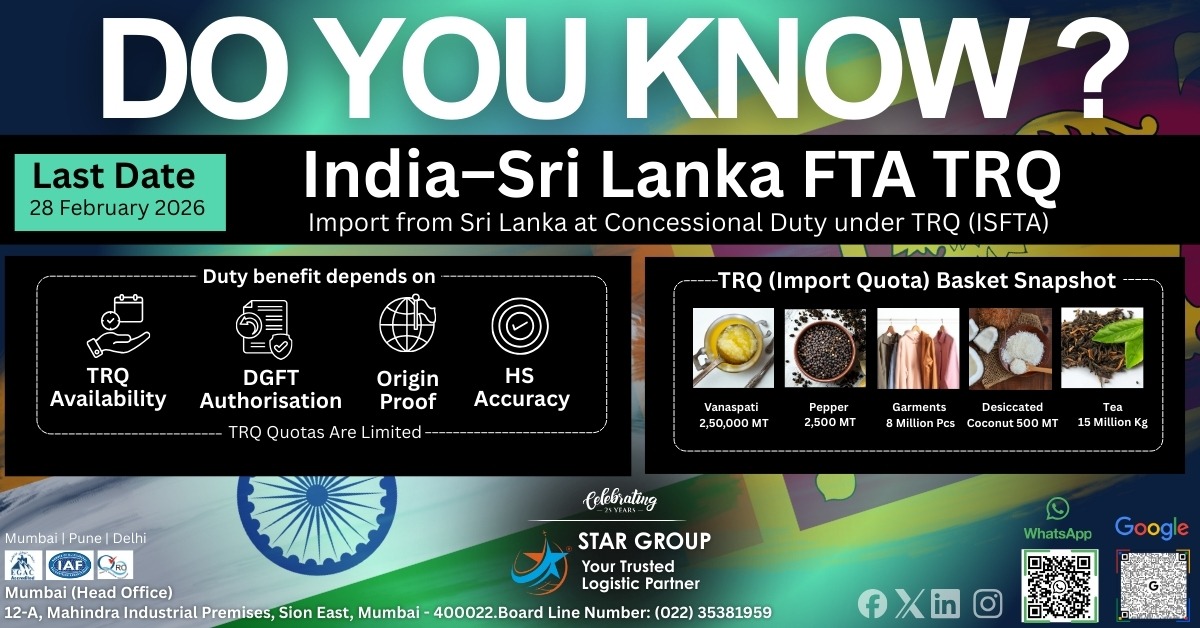
Under the India–Sri Lanka Free Trade Agreement (ISFTA), certain Sri Lanka–origin goods can be imported into India under a Tariff Rate Quota (TRQ) at concessional or Nil Customs duty. Once the notified annual quota is exhausted, imports attract normal tari...
Under the India–Mauritius CECPA, select products can be imported into India under a Tariff Rate Quota (TRQ). TRQ allows importers to claim a preferential in-quota duty rate for a notified quantity, subject to DGFT procedure and Customs compliance. What i...
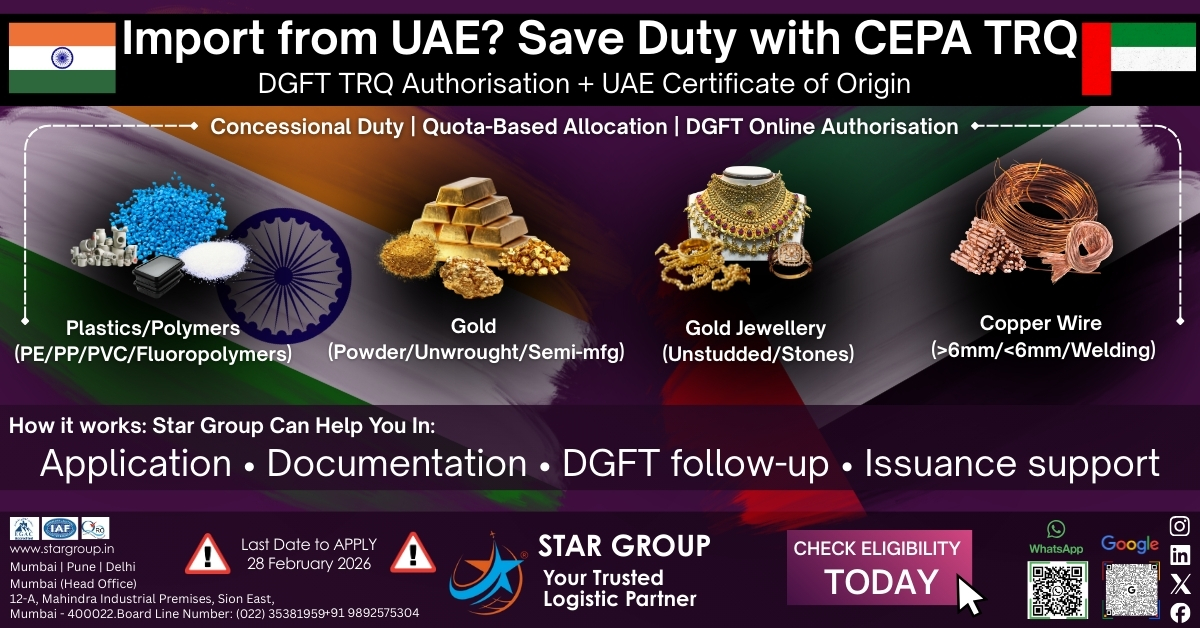
How to use DGFT TRQ authorisation to import select items from UAE at concessional customs duty (with official rules + product snapshot) What is TRQ under India–UAE CEPA?Under the India–UAE Comprehensive Economic Partnership Agreement (CEPA), certain produ...
Country-wise TRQ Items Covered Under Sri Lanka, Mauritius, Nepal, UAE & MercosurThe Directorate General of Foreign Trade (DGFT), Ministry of Commerce & Industry, has issued Public Notice No. 50/2025-26 dated 24 February 2026, extending the deadline for fi...
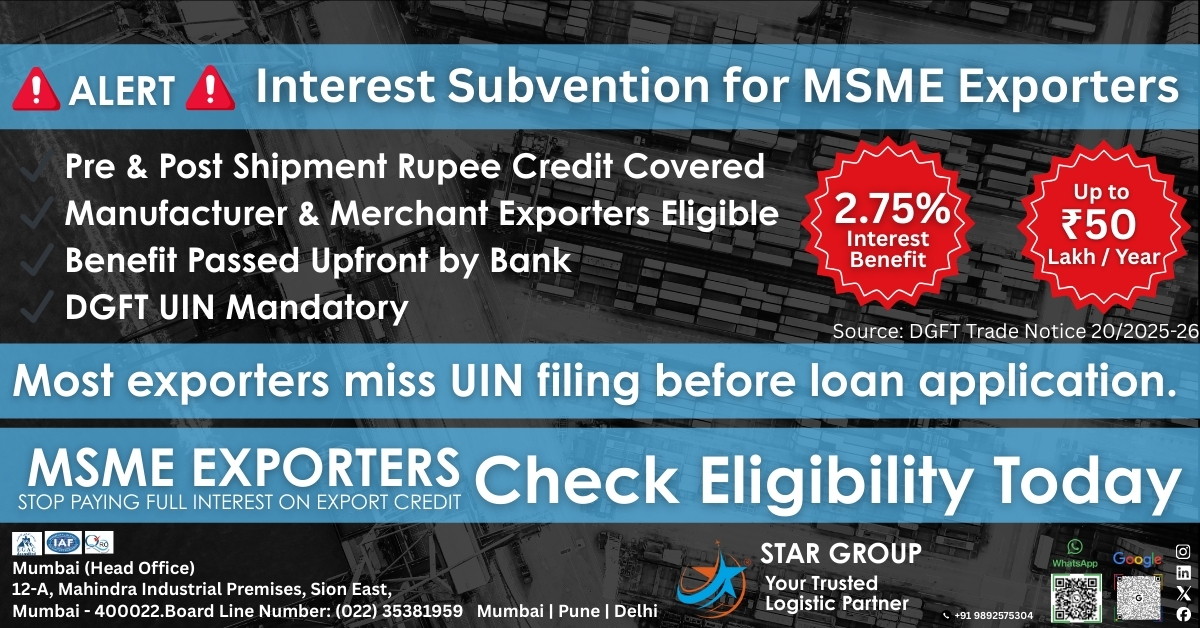
OverviewDGFT has launched “Interest Subvention for Pre- and Post-Shipment Export Credit” under the Export Promotion Mission (EPM) – Niryat Prothsahan through Trade Notice No. 20/2025-26 dated 02 January 2026, with immediate effect. The intervention is ope...
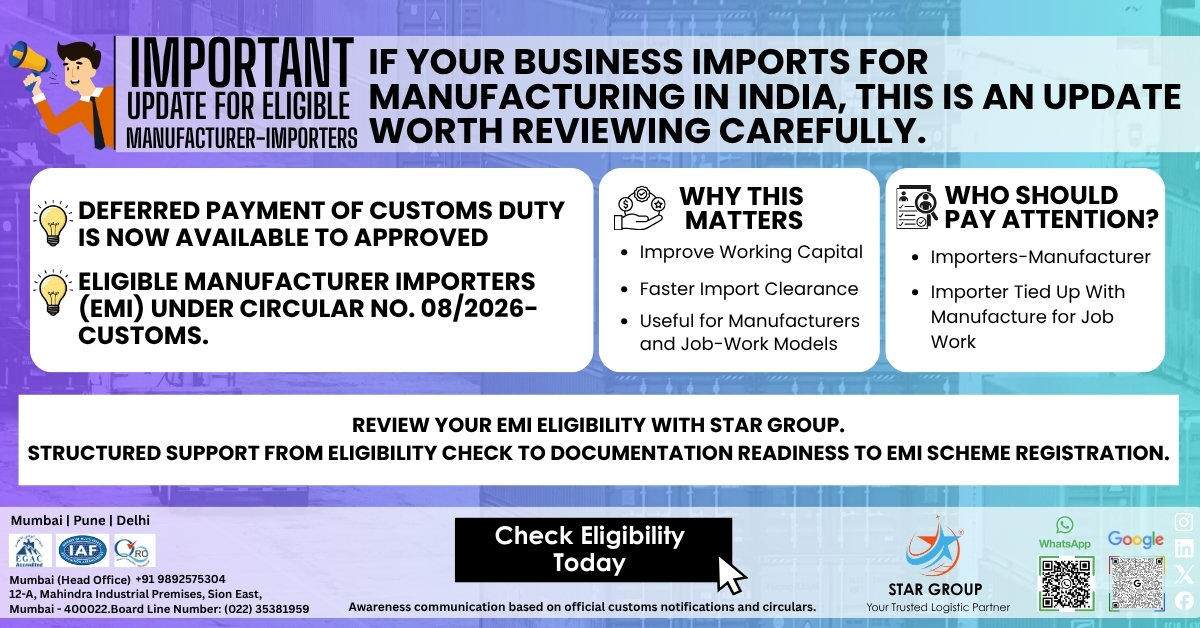
Do you know that the Government of India now allows eligible importers to pay customs duty after 30 days instead of paying it upfront?In a major relief for compliant importers and domestic manufacturers, the Central Board of Indirect Taxes and Customs (CB...
The Central Board of Indirect Taxes and Customs (CBIC) has introduced an important facilitation measure for eligible manufacturer-importers through the Eligible Manufacturer Importer (EMI) Scheme. Under this framework, approved EMI entities can clear impo...
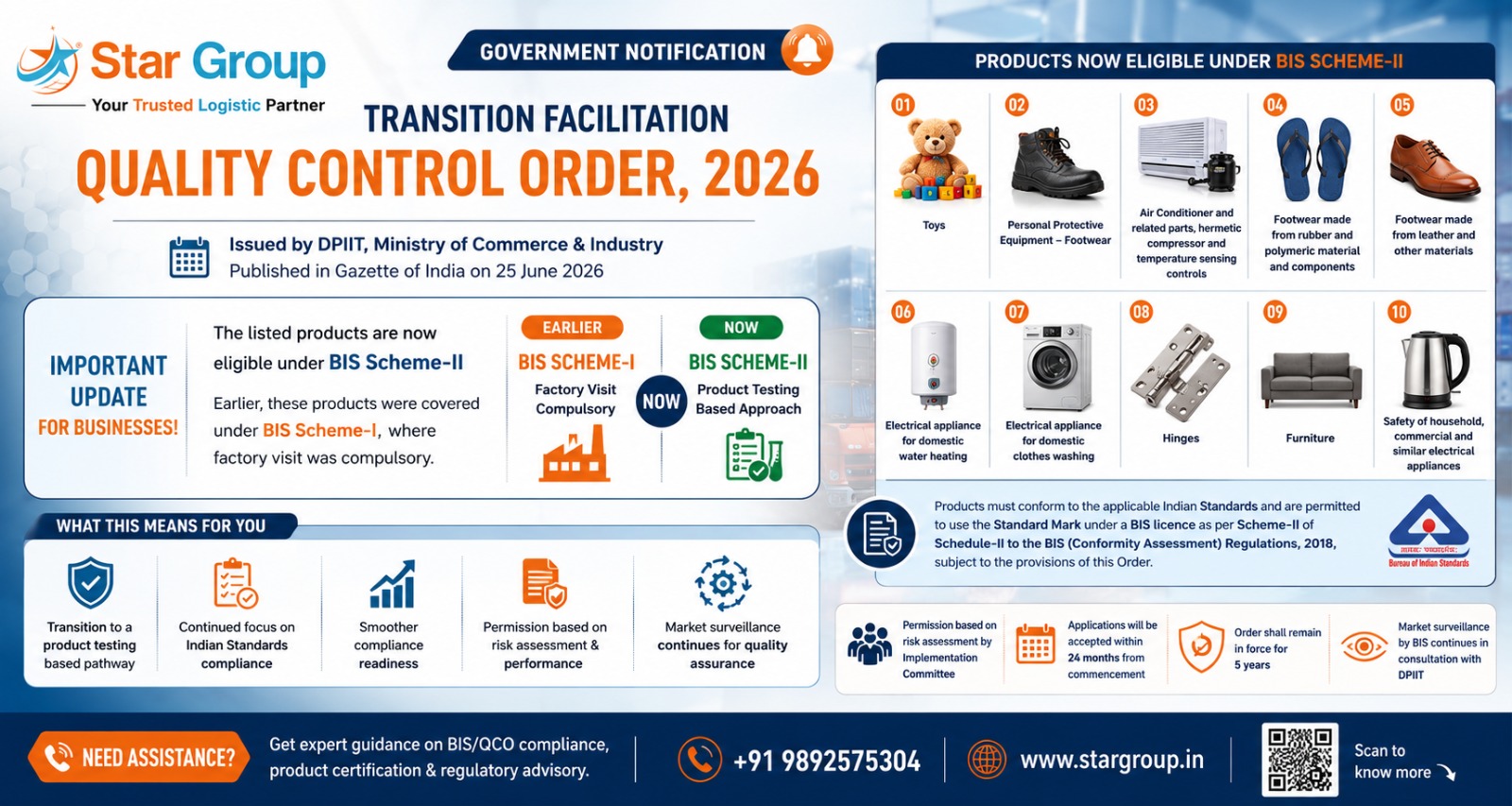
The Ministry of Commerce and Industry, through the Department for Promotion of Industry and Internal Trade (DPIIT), has notified the Transition Facilitation (Quality Control) Order, 2026.This notification is important for businesses dealing with selected ...
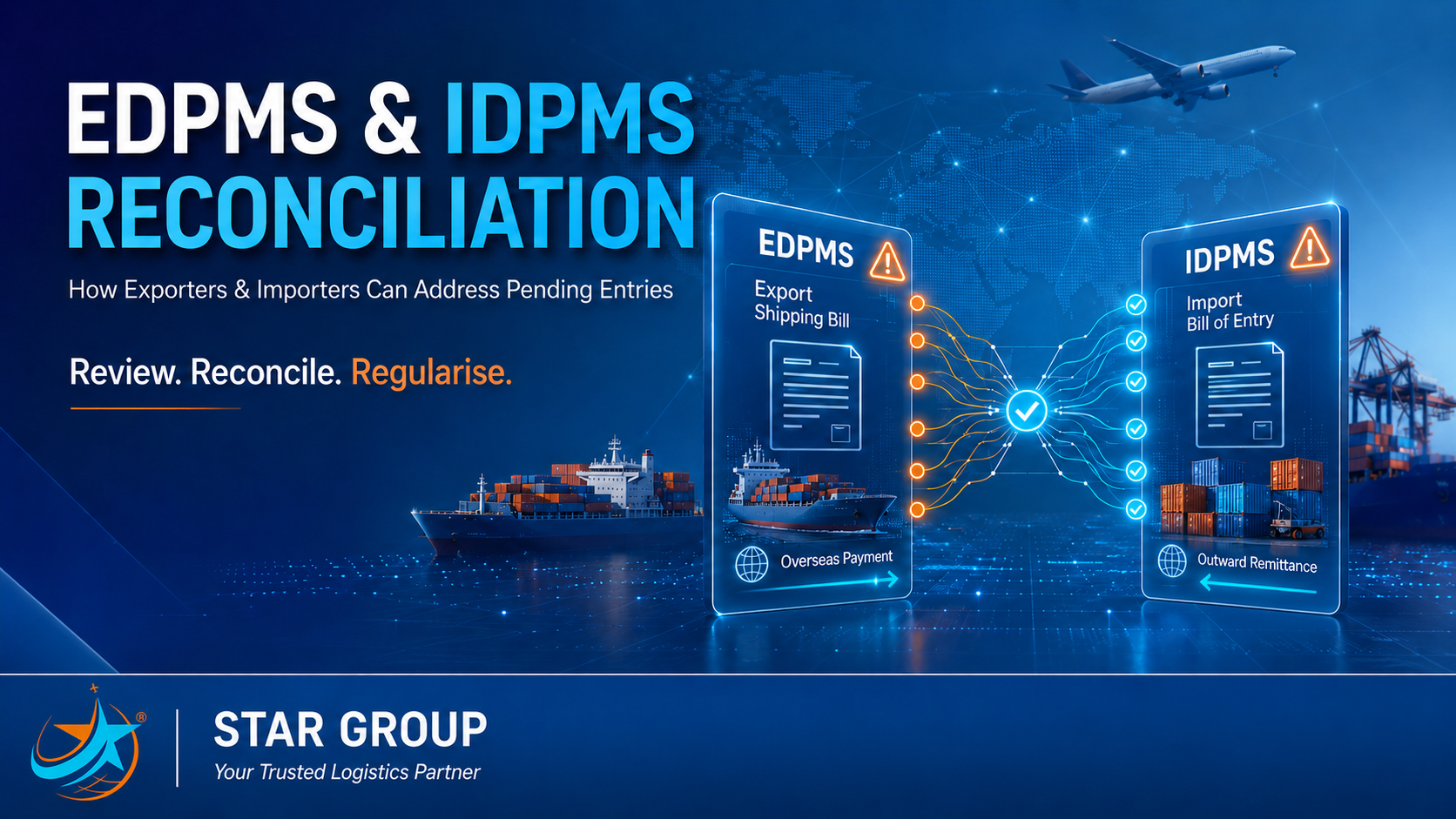
An export payment may have been received—or an import payment completed—yet the related Shipping Bill or Bill of Entry may still appear as outstanding in the banking system.These pending records can arise from missing documents, incorrect references, diff...
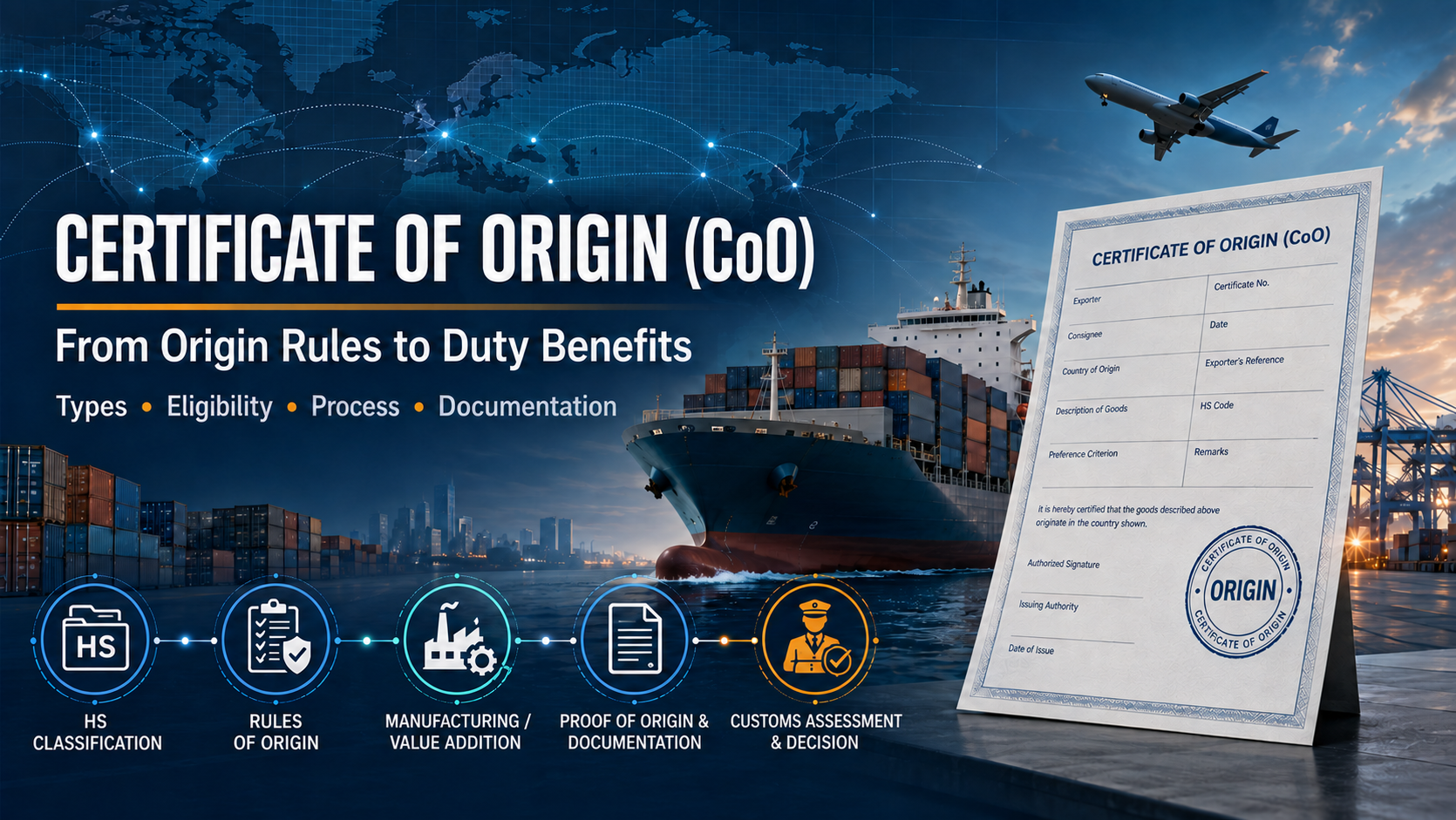
In international trade, the country from which goods are shipped is not always their country of origin.A product may be exported from India, contain inputs sourced from several countries and still qualify—or fail to qualify—as Indian-origin, depending on ...
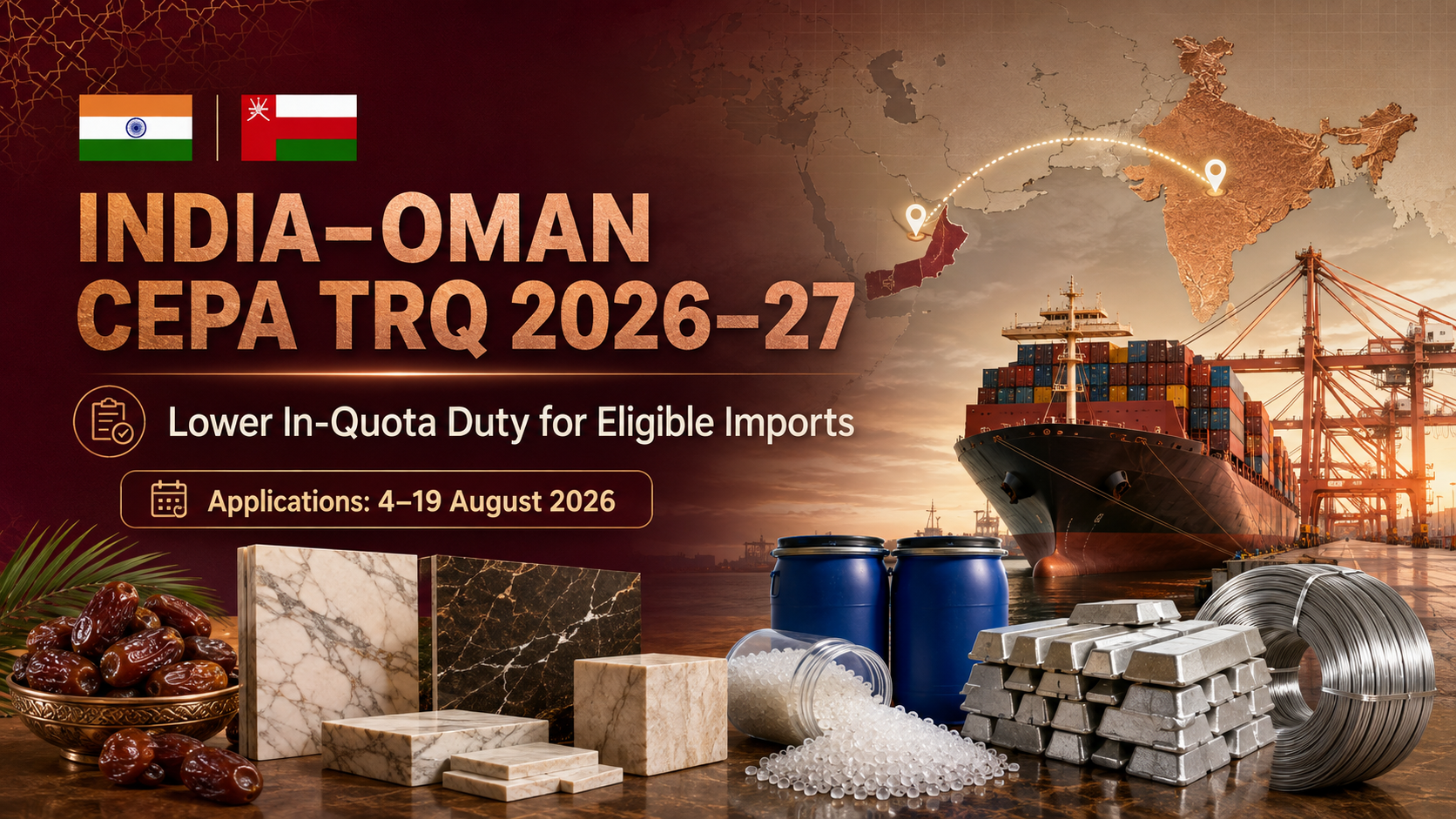
The Directorate General of Foreign Trade (DGFT) has invited applications for Tariff Rate Quota (TRQ) allocation under the India–Oman Comprehensive Economic Partnership Agreement (CEPA) for FY 2026–27.Applications can be submitted from 4 August 2026 to 19 ...
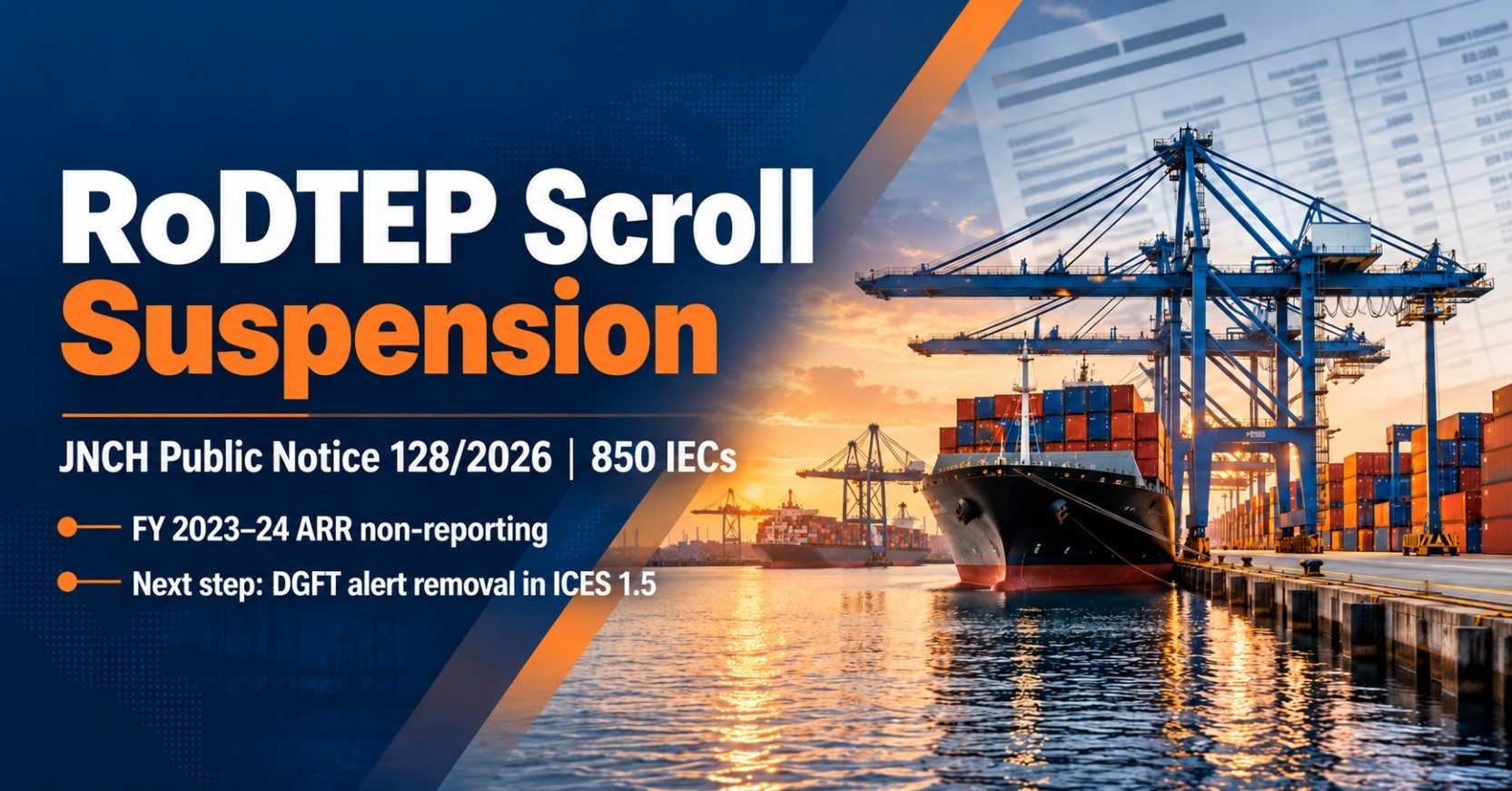
Jawaharlal Nehru Custom House (JNCH), Nhava Sheva, issued Public Notice No. 128/2026 on 8 October 2026 after receiving representations about RoDTEP scrolls not being generated for certain Shipping Bills. The issue related to alerts or suspension shown aga...